To read a golf yardage marker, establish three things: the units, the point the distance starts from and the point it ends at. A number beside a sprinkler or on a path may describe a distance to the front or center of the green, rather than today’s flag. Check your course’s explanation before treating different numbers as contradictory.
This guide helps US beginners interpret course information. It does not assign a club to a distance, rate a measuring device or provide a competition ruling. You can begin by understanding the information the venue already supplies before deciding whether another device would solve a real problem.
A distance number needs a reference point
Read the marker legend, scorecard notes or course information page. If the meaning is unclear, ask the starter to explain one actual marker and its units. Do not assume every course uses the same colors, symbols or conventions.
| Information you see | What to establish |
|---|---|
| A tee sign or scorecard distance | The hole, tee row, units and stated measurement convention |
| A fairway marker or marked sprinkler | Where that measurement starts and whether it ends at the green’s front, center or another point |
| A cart-path marker | The same reference checks; do not assume it is a distance from your ball |
| A flag-location indicator | What that venue’s symbol means and whether it gives a region or an actual measured position |
| A digital distance | The selected course/hole, units, target and any mode or adjustment shown |
This is an editorial reading checklist, not a description of features guaranteed at your course. Use the scorecard guide for the card’s rows and score entries; the card’s hole-length number is not a live measurement from wherever your ball now lies.
Front and center can differ at the same course
Relevant operator explanations checked 18 October 2026 show why you should verify the endpoint:
- Cross Creek Golf Club in South Carolina describes sprinkler-head distances to the green’s front edge, while its cart-path markers and par-three monuments refer to the middle.
- Eagle Glen Golf Club in Indiana describes its sprinkler-head yardages as distances to the green’s center.
Neither explanation establishes the meaning of a sprinkler at a different venue. Nor does a center distance automatically give the distance to the flag, an obstacle or the place you want the ball to finish. Ask about the point you actually need rather than replacing one unknown with an assumed adjustment.
Keep the measurement’s starting point in view
A marker identifies its stated distance from its own reference position. If your ball is elsewhere, the number is not automatically the distance from your ball. A marker seen on a nearby path can be useful context without being a precise shot measurement.
Do not walk into another player’s hitting area to locate a marker or take a reading. If you cannot establish a useful number promptly and safely, ask for help and follow the considerate pace routine. This guide does not prescribe pacing off a route or a geometric formula across a fairway.
A fictional example: two labels, two endpoints
Suppose a teaching worksheet shows 130 yards to the front and 145 yards to the center from the same stated position. The labels answer different questions; their difference alone is not a measuring error. Neither label states the distance to today’s flag.
These are invented numbers for interpreting labels, not measurements from either example course. They do not establish the green’s shape, a required carry distance or which club you should hit. Do not add or subtract a standard allowance for front or back flags without knowing the actual layout and information provided.
Distance information is separate from club selection
After identifying the target and reference distance, you still need information about your own shots and the situation. A printed number does not say that every beginner should use the same iron or hit a particular distance.
If your distances are unknown, bring that question to a lesson instead of copying a generic chart as your personal result. For choosing where to start the round, use the tee-choice guide; a marker farther along a hole does not resolve the whole course’s suitability.
If you already have an app, watch or rangefinder, ask how its displayed endpoint compares with the course’s markers. Follow the venue or event’s device instructions. We have not tested device accuracy, confirmed permitted functions for your event or established that you need to buy one for a first visit.
Take this question to the starter
“Could you show me how your distance markers work? Are they in yards or meters, do these particular markers refer to the front or center, and how is the flag position shown?”
This is a suggested question, not a conversation TeeClear has had with a course. Save a short note with your first-round plan. Understanding a few labels before starting can make the information easier to use without building a new equipment shopping list.
Sources and scope
Relevant written marker explanations from Cross Creek Golf Club and Eagle Glen Golf Club, linked above, were read and compared on 18 October 2026. Their conventions support the specific examples, not a universal marker code. No course visit, instrument measurement, GPS comparison or club-distance test was performed.
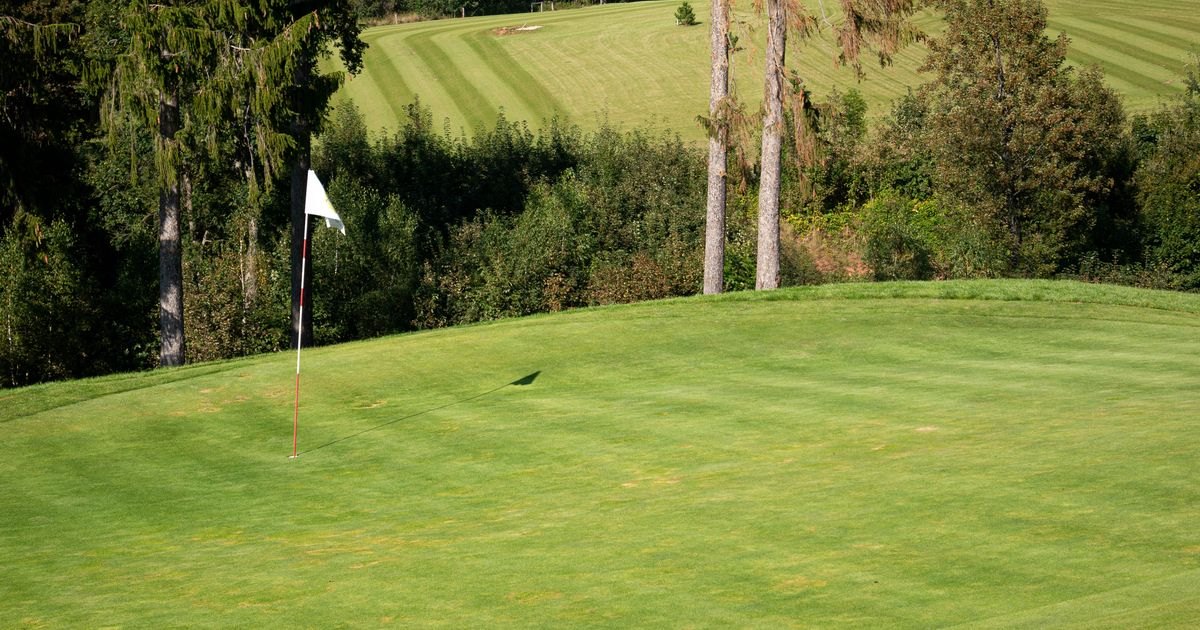
Cover photo: Lucie Liz on Pexels, used under the Pexels License. Reused illustrative stock photography; it does not document either venue or a TeeClear measurement.